
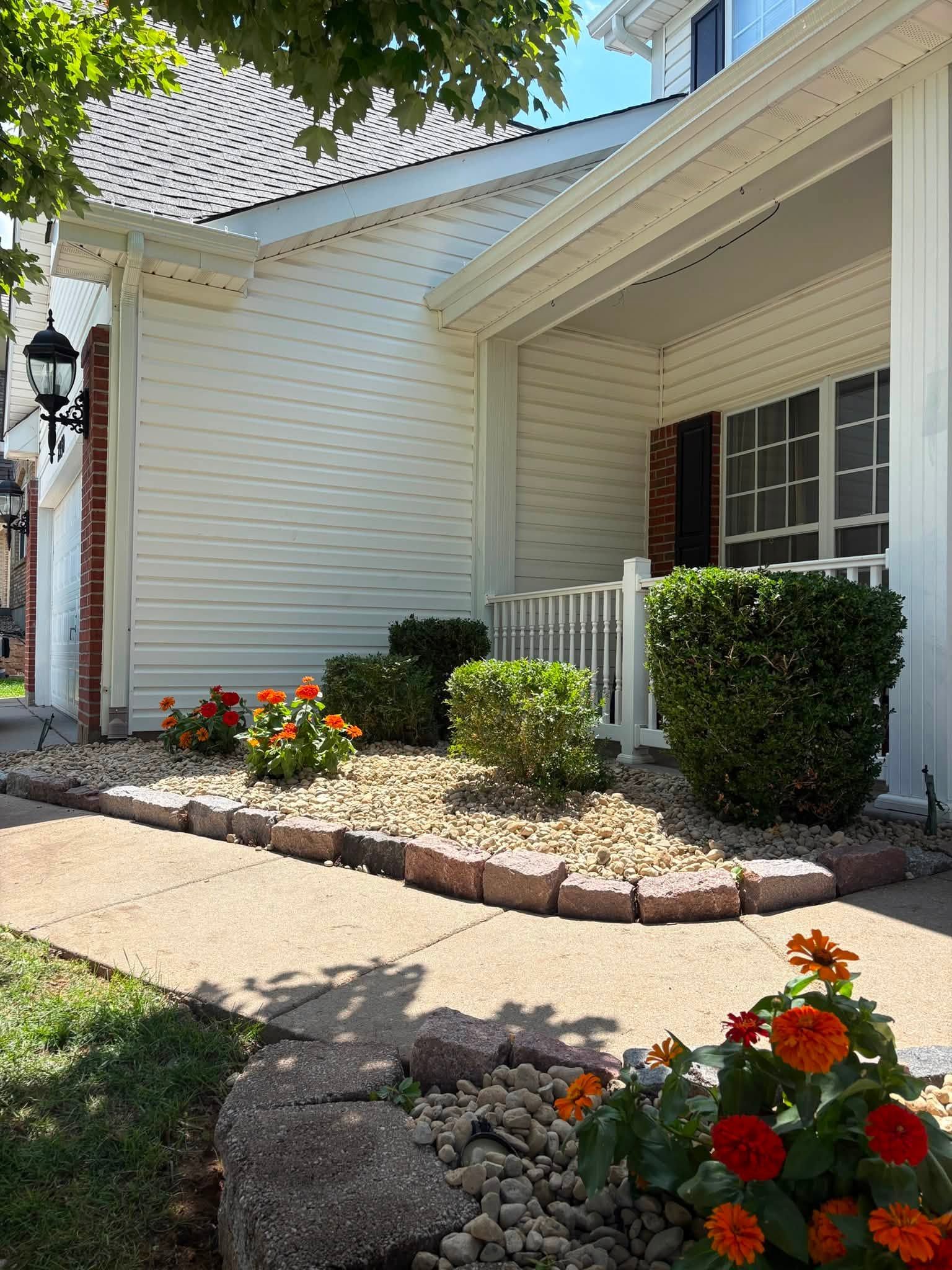
Landscape Finishing That Serves Multiple Purposes
Rock and Mulch in Wentzville for moisture control, erosion prevention, and seasonal bed maintenance
Properties with exposed soil around plantings, along slopes, or in high-traffic landscape areas lose moisture rapidly and develop erosion patterns during rain events. JL Contracting sources and installs rock and mulch that address these functional needs while finishing landscape beds to match regional aesthetic standards. The service applies to Wentzville properties where soil type and seasonal weather create maintenance challenges that surface treatments help manage. You see material installed at depths and coverage rates that actually perform rather than cosmetic applications that wash away or decompose within one season.
Material selection depends on whether the area requires weed suppression, temperature moderation, water retention, or erosion control—each outcome requires different rock size, mulch type, and installation depth. St. Louis soil types and regional preferences guide choices between decorative stone, river rock, shredded hardwood, or bark mulch. Installation includes grading to prevent material migration and edging to maintain defined bed lines.
Request an estimate based on measured bed areas and specific material requirements for your landscape.
How Material Selection Addresses Landscape Needs
Rock installations provide permanent coverage that doesn't decompose, making them suitable for areas where replenishment isn't practical or where moisture retention isn't the goal. Mulch applications decompose gradually, adding organic matter to soil while moderating temperature and retaining moisture around plantings. The choice depends on what the landscape bed needs to accomplish—rock prevents erosion on slopes and around drainage areas, while mulch supports plant health and reduces watering frequency during dry periods.
After installation, you notice defined bed edges that stay in place, even coverage without thin spots, and material depth sufficient to suppress weed growth through the first growing season. Rock beds maintain appearance without seasonal replenishment, and mulch beds show consistent color and texture that integrates with surrounding plantings. Water penetrates to soil level without washing material into adjacent areas, and beds maintain coverage during heavy rain.
The service includes seasonal replenishment planning for mulch applications, addressing decomposition rates and when additional material becomes necessary to maintain functional depth. Rock installations may require periodic cleaning to remove organic debris but don't need replacement. Both options integrate with existing hardscape and planting layouts without requiring redesign of landscape features.
Answers to Frequent Service Questions
Material selection and installation methods determine whether rock and mulch perform as intended or create additional maintenance requirements. These answers address common considerations.
What depth of rock or mulch actually prevents weed growth?
Three inches of material creates sufficient barrier for weed suppression in most landscape beds—less depth allows light penetration and doesn't maintain coverage as material settles or decomposes.
How often does mulch need replenishment in Wentzville area landscapes?
Shredded hardwood mulch typically requires replenishment every 18 to 24 months as decomposition reduces depth below functional levels, while bark mulch lasts slightly longer due to slower breakdown rates.
When should rock or mulch installation happen relative to planting?
Material gets installed after plantings are established and beds are edged, allowing proper coverage around root zones without disturbing new plants or requiring rework as landscape design develops.
Why does rock placement matter for erosion control?
Proper grading directs water flow across rock rather than creating channels that concentrate runoff—installation that ignores grade creates erosion paths instead of preventing them.
What determines whether rock or mulch works better for a specific bed?
Slope, sun exposure, proximity to structures, and whether the area supports plantings determine which material performs correctly—mulch works for planting beds requiring moisture retention, while rock suits drainage areas and high-traffic zones.
JL Contracting handles material sourcing, delivery, and installation with grading adjustments included where bed preparation requires leveling or slope modification. Arrange a site visit to review bed areas and determine material quantities needed for complete coverage.